Skip to content
Shipping from the studio in SulęcinSulęcin parcel locker 15 zł, courier 20 zł −15% on jewellery with an account

What is the Yene Mar labyrinth?

A symbol older than writing.

Seven corridors, one entrance, the centre and the return by the same path. This is where the story of the Yene Mar labyrinth begins.

Why a labyrinth?

My path began in Ethiopia.

In 2017 I gave birth to my daughter and moved to Ethiopia with her father. We settled there and started building a house. I was looking after a small child and at the same time trying to find myself again, after the enormous change that motherhood was for me.

I read books and wrote down ideas and dreams about the life I wanted. I was looking for my passion. That was when I started making jewellery. Ethiopian handicraft inspired me. I began with crystals and macramé, and I sold my first pieces at Salem's Ethiopia Designs in Addis Ababa.

I am still in touch with Salem, the owner of that place. I like to think that my first steps as a maker happened right there, among Ethiopian handicraft and women who were building their own businesses and their own path.

And then I came across a book.

“The Wild Woman. A Return to the Sources of Feminine Energy and Power” by Angelika Aliti.

Something opened up in me.

I felt an unusually strong connection with the labyrinth and with the idea of a path that leads a woman to meet herself. In this sign I saw what I was looking for myself at the time: a path to myself as a woman, a mother and a maker.

I wanted to share this discovery with others. I did not yet know how.

So I started drawing the labyrinth.

I kept drawing it until its form became the sign of my brand. The Yene Mar logo was created right then, in Ethiopia, on a wooden floor, while I was playing with my daughter.

This path continues to this day.

Almost ten years have passed since then. In that time I have looked for information about the labyrinth, learned its history and tried to understand what it can mean for me and how its idea can be used in today's world.

Today I know that I do not want to treat it only as a symbol.

I also want to get to know it as a practice: to experience it, to learn how it leads, and to see what walking their own path can set in motion in a person.

Because my path with the labyrinth still continues.

The labyrinth does not lead you to someone you are supposed to become.
It leads you back to yourself.

The book that started my path with the labyrinth

Angelika Aliti
“The Wild Woman. A Return to the Sources of Feminine Energy and Power”

It was this book that opened the world of the labyrinth to me and started a search that continues to this day.

See the book
Where does this sign come from?

A sign thousands of years old

The labyrinth is a sign that appears in different places and eras. We find its traces on clay tablets, in rocks, on coins and in stone.

Over thousands of years this motif has taken on different meanings, but the path itself, leading to the centre and back, has remained its most important feature.

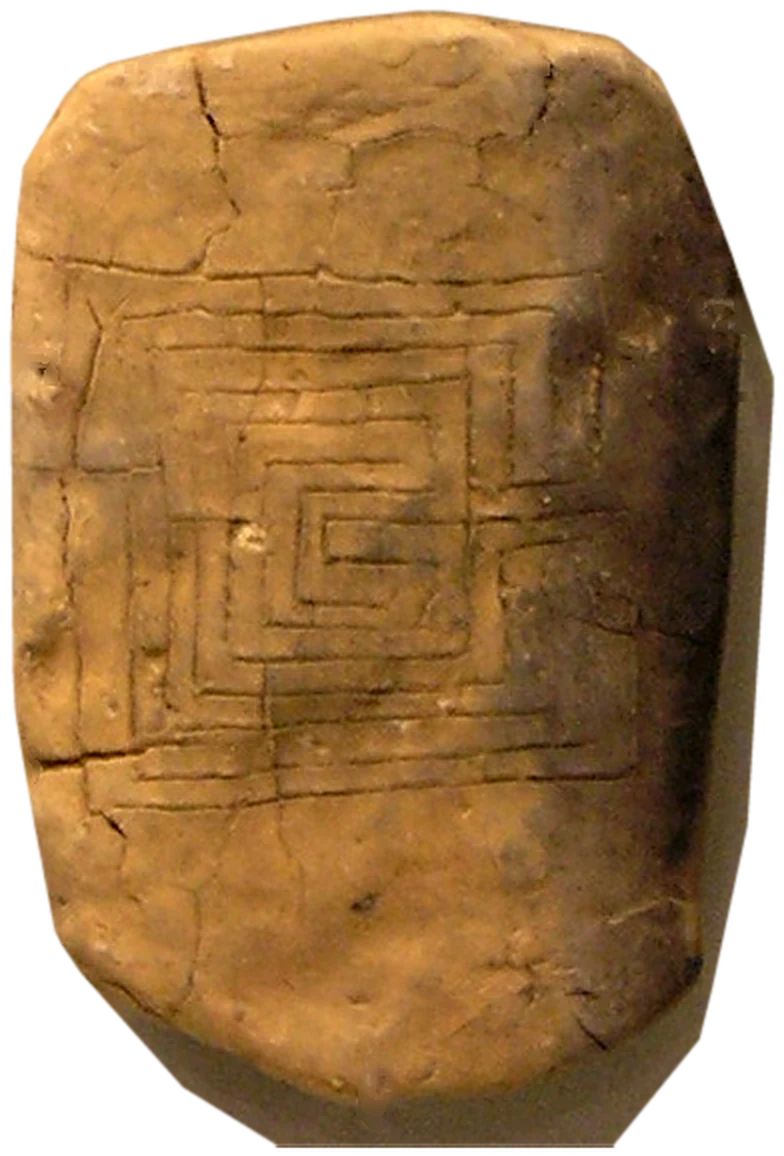
  1. c. 1200 BCPylosA drawing of a labyrinth on a clay tablet.
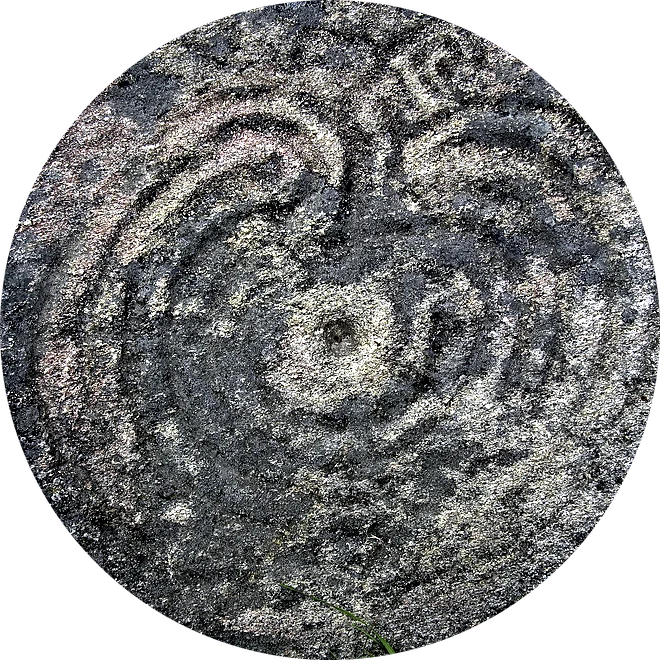
  2. Bronze AgeGaliciaLabyrinths carved into rocks by the Atlantic.
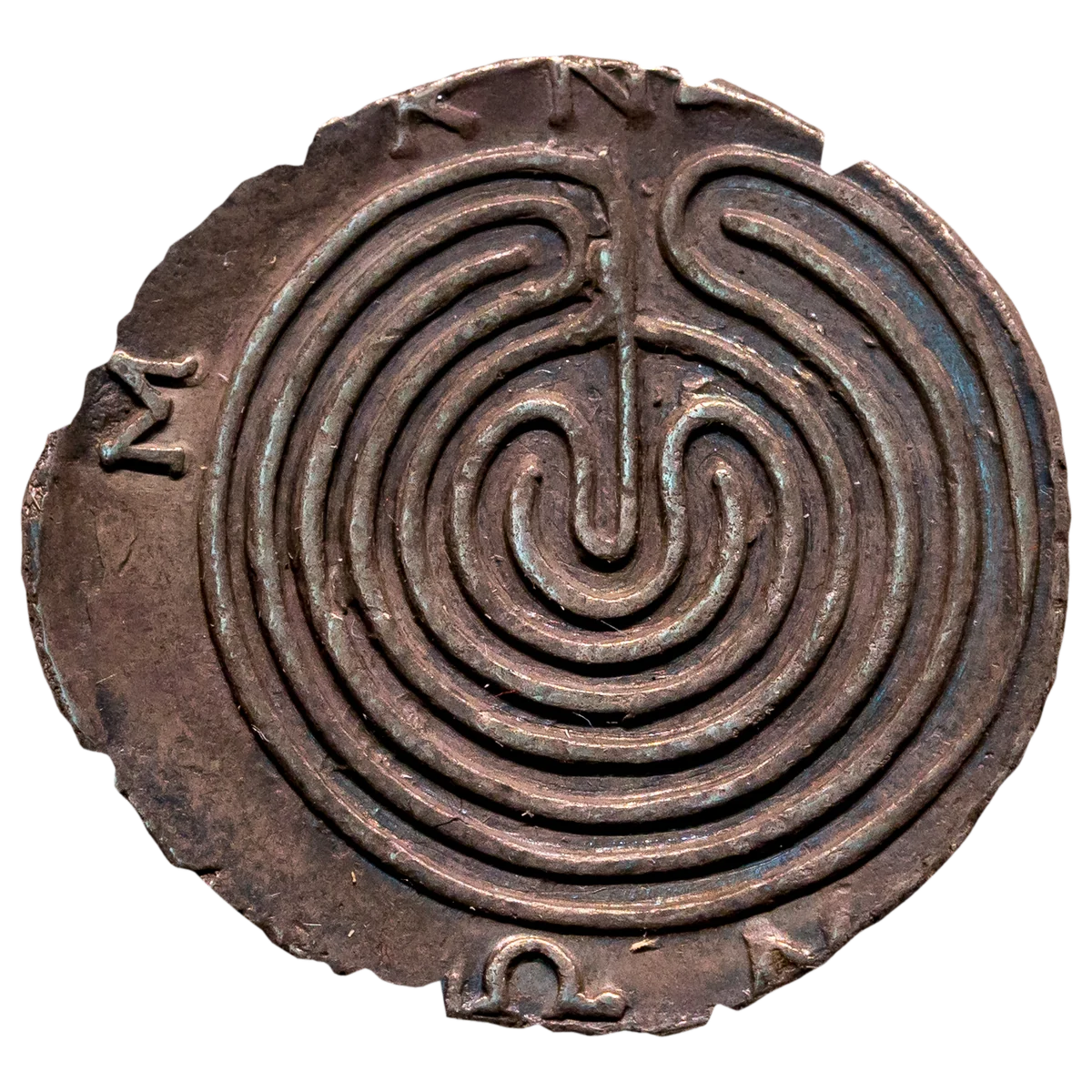
  3. 4th–1st century BCKnossosSilver coins with the same drawing.
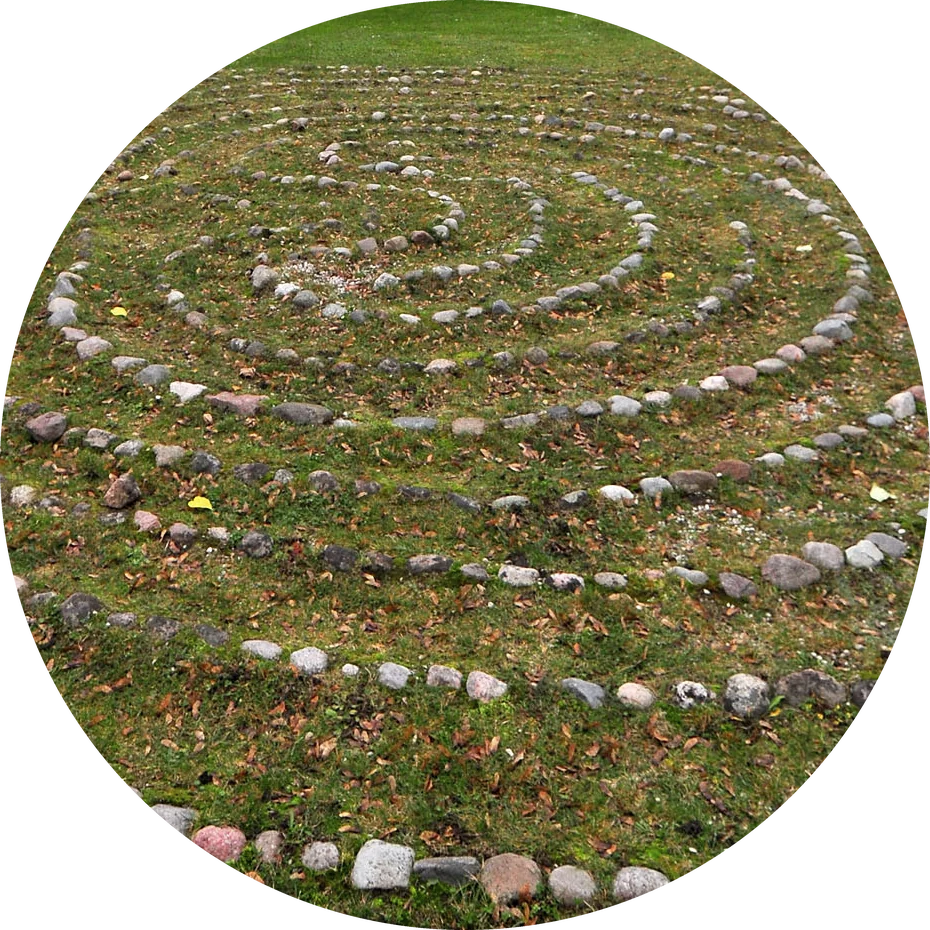
  4. since the Middle AgesBaltic SeaHundreds of stone labyrinths on the shores of Sweden and Finland.
  5. since 2019SulęcinYene Mar: the same symbol, worn on the skin.
  • Pylos, c. 1200 BC. Clay tablet with a drawing of a labyrinth (National Archaeological Museum, Athens).
    Pylos, c. 1200 BC. Clay tablet with a drawing of a labyrinth (National Archaeological Museum, Athens). Photo: Marsyas (2005), CC BY 2.5, background removed
  • Knossos, c. 110–90 BC. Silver tetradrachm with a round labyrinth (Münzkabinett, Berlin).
    Knossos, c. 110–90 BC. Silver tetradrachm with a round labyrinth (Münzkabinett, Berlin). Photo: ArchaiOptix, CC BY-SA 4.0, background removed
  • Galicia. Labyrinth carved into rock at Mogor.
    Galicia. Labyrinth carved into rock at Mogor. Photo: Lansbricae from España, CC BY-SA 2.0, cropped to a circle
  • The Baltic. Stone labyrinth by the church in Fröjel on Gotland.
    The Baltic. Stone labyrinth by the church in Fröjel on Gotland. Photo: Arkland, CC BY-SA 3.0, cropped to a circle

One path. Two directions. One meeting.

The labyrinth leads along one path only. First to the centre, then back out.

The path to the centre is a descent, a pause and a meeting with yourself. It is a moment when you can see what usually stays outside your everyday attention: your fears, patterns, desires and the truth about where you really are.

The one waiting at the centre is not someone you are supposed to become. It is you.

And then the way back begins. You return to your life, but you can return with a different outlook, with a new awareness of what you want to leave behind and where you want to go next.

That is why the labyrinth does not lead you to someone you are supposed to become. It leads you back to yourself.

  1. Descentyou pause
  2. Meeting yourselfyou are waiting at the centre
  3. Transformationa new outlook
  4. Returnto your life

Click a corridor or enter the labyrinth

Seven corridors. One path.

The Yene Mar labyrinth has seven corridors and one entrance. Each corridor leads through a different part of life and has its own stones.

Today you can recognise which corridor you are in: what is happening inside you and what you need right now.

There are no shortcuts through the labyrinth. The path leads to the centre and back. Its meaning lies in walking the whole path: meeting yourself, transformation and return.

Sources: tablet PY Cn 1287 from Pylos; tablet KN Gg 702 from Knossos; silver coins of Knossos; petroglyphs from Mogor in Galicia; the Tragliatella jug; the labyrinth in Chartres Cathedral.